
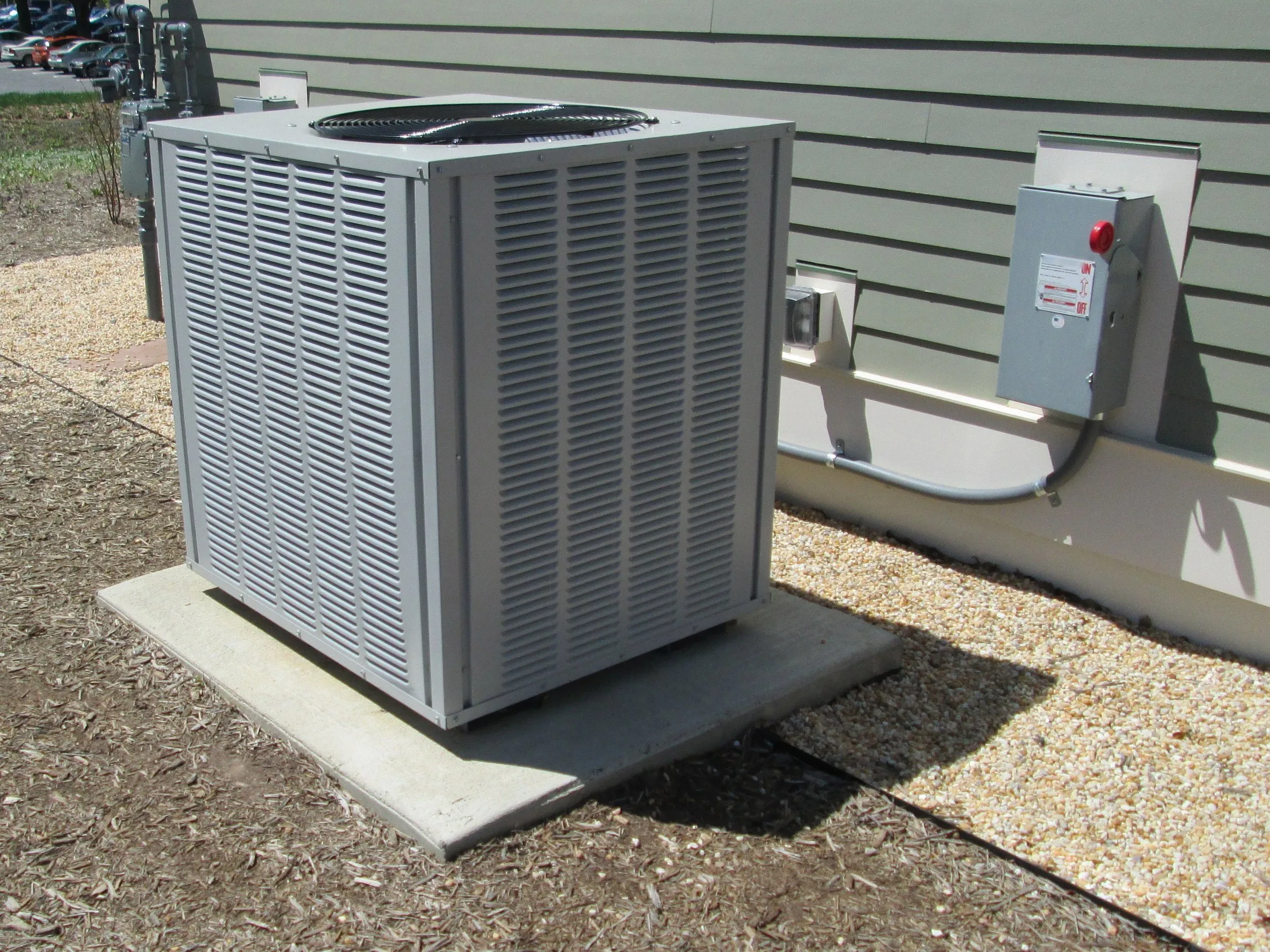
Emergency heat is a thermostat setting that turns your heat pump off and heats the house with its backup alone. Usually that backup is a set of electric heat strips inside the indoor air handler. In some homes it’s a gas furnace. You switch emergency heat on by hand, and it’s meant for one situation: the outdoor unit has stopped working and you need heat until someone fixes it.
It is not a setting for very cold weather. It’s an easy mix-up to make, and on an all-electric system it’s an expensive one.
(Not sure your system is a heat pump at all? How to tell if you have a heat pump walks through the clues. A gas furnace paired with ordinary central air has no use for this setting.)
What the EM heat setting does
A heat pump doesn’t make heat the way a furnace does. It moves it. Even on a January morning there’s heat in the outdoor air, and the outdoor unit collects it and carries it inside. That’s what makes a heat pump efficient, and it’s also why it comes with a backup: on the coldest days, or when a part fails, the heat pump alone may not be enough.
Emergency heat takes the outdoor unit out of the picture. In the words of Lennox, it “completely shuts off the heat pump and runs only off the backup source.”
So what you get depends on what that backup is. Electric heat strips are the usual one, and they work much like the coils in a toaster. In a dual fuel system the backup is a gas furnace instead, and that changes the cost picture (more on that below).
On the thermostat it usually shows as EM or Emergency Heat; the manual will tell you which symbol is which.
One wrinkle, and it’s a real one. Some systems don’t treat emergency heat as purely manual. They have emergency heat lockouts, settings that skip the heat pump below a chosen outdoor temperature and run emergency heat on their own. If you see emergency heat running and nobody touched the thermostat, that may be how the system was set up. Or it may not. From the thermostat alone you can’t tell, so ask whoever installed it.
Aux heat vs emergency heat
On most systems, aux heat and emergency heat use the same equipment. The difference is who decides when it runs.
Carrier sums it up in a word each. Auxiliary heat: “Automatic. It runs alongside your heat pump to boost heating power.” Emergency heat: “Manual. You must physically switch your thermostat to this setting.”
With aux heat, the heat pump keeps running and the backup adds to it until the house reaches the set temperature. Then the thermostat drops the backup and the heat pump carries on alone.
With emergency heat, the heat pump is off and stays off until you switch the thermostat back to Heat. The backup carries the whole house.
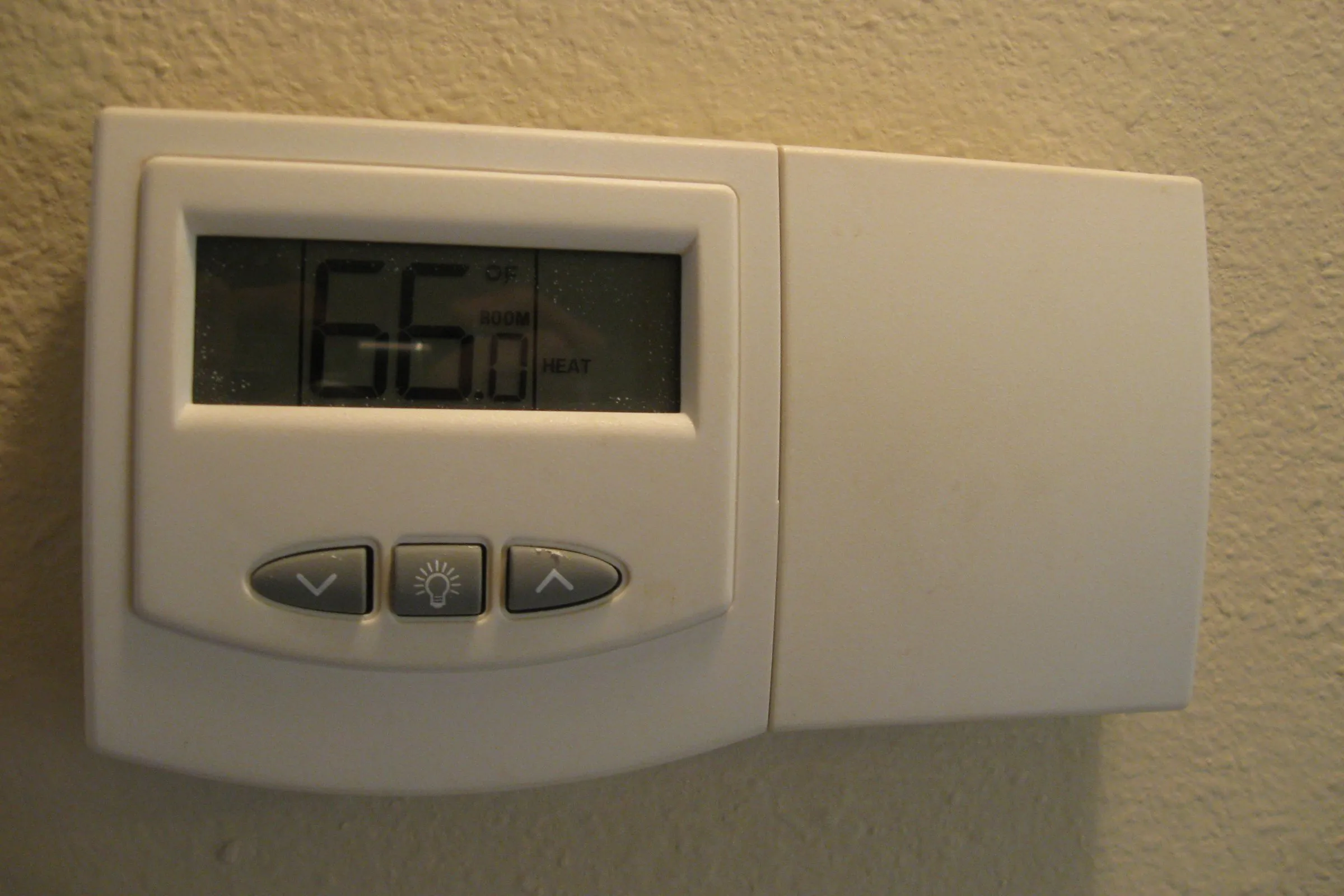
So AUX on the display on a cold morning is usually the system doing its job. EM means someone chose it (or, on the lockout systems above, the setup did).
Why aux heat comes on by itself
Aux heat comes on when the heat pump can’t reach the temperature you’ve set efficiently on its own. In practice there are three common triggers.
Cold weather
The colder it gets outside, the more heat the house needs and the less the heat pump can gather, and at some point it can’t keep up alone. Trane lists an outside temperature “below 40 degrees or a set aux heat trigger temperature” as one of the triggers. Cold-climate models hold out much longer. ENERGY STAR says a cold-climate air-source heat pump “will continue working at temperatures below 5°F,” with a backup heating the home most efficiently “when temperatures are even lower.” For what this means on a real New Jersey winter, do heat pumps work in New Jersey winters? goes through it.
A big jump on the thermostat
This one catches people moving over from a furnace. Bump the thermostat from 62 to 70 when you get up, and the thermostat sees an eight-degree gap and calls in the backup to close it fast. Your electric meter notices.
How big a jump is too big? Trane puts the trigger at “more than 3-4 degrees.” It depends on the thermostat and how it was programmed, so treat that as a rough guide. The habit worth breaking is the deep overnight setback followed by a big morning jump. A smaller setback, or a thermostat that ramps up gradually, makes it less likely the strips kick in. What temperature to set your thermostat in winter covers setpoints more generally.
Defrost
In damp cold weather, frost builds on the outdoor coil, and the heat pump runs a defrost cycle to melt it. Lennox says many heat pumps switch on backup heat strips during defrost “to prevent temperature swings inside,” and puts a typical cycle at 5 to 15 minutes. You may see steam rising off the outdoor unit while it happens. That’s water vapor, and it’s normal. (If your system has no backup, the vents can blow cool air while the outdoor unit de-ices itself. The heat pump section of furnace blowing cold air? covers that.)
When aux heat is a warning sign
A short burst of aux on a cold morning is fine. Aux that runs constantly in mild weather is not. Trane’s line: it’s “only a bad thing if it comes on and stays on when temperatures are above 40 degrees,” because that “can indicate there is a problem with your heat pump or thermostat.” Defrost cycles that run long and keep repeating are worth having checked too. An electric bill that jumps in a month that wasn’t especially cold, with AUX lit whenever you look, is worth a call.
When to switch to emergency heat
Lennox gives three situations. A technician told you to use it while you wait for a repair or a part. The heat pump “has completely failed and you need temporary heat.” Or the outdoor unit is “frozen solid or damaged (from storm debris, ice buildup, etc.) and cannot operate safely until inspected.”
How do you know the outdoor unit has quit? One likely sign: the indoor fan is running and the thermostat is calling for heat, but the outdoor unit is silent, and the house keeps slipping on a day that isn’t especially cold. Ice is the other one. Ordinary frost is what the defrost cycle is for. A unit that’s frozen solid is a different matter.
Before you switch, run through the quick checks in the table below. A thermostat left on Cool or a tripped breaker can look a lot like a dead heat pump. If snow has drifted against the unit, brush it away. Leave ice on the coil alone: a unit that’s frozen solid needs inspecting before it runs again.
If the outdoor unit really has stopped, switch to emergency heat to keep the house warm, and then call. Trane: “If you engage the emergency setting, call for HVAC service right away.” There are two reasons not to wait. On an electric system you’re now heating the most expensive way. And the backup has become your only heat, with nothing behind it if it also has a problem.
What we’d steer you away from is reaching for EM heat just because the forecast says 8°F. A working heat pump with aux heat already uses the backup when it needs it. Switching to emergency heat on a cold night doesn’t give you a stronger setting. It shuts off the efficient part and leaves the backup to carry the house alone, and the house may take longer to warm up. If the house can’t hold temperature on the coldest nights with aux running, that’s a question about sizing or service, not about the thermostat.
(The name doesn’t help. “Emergency” sounds like the button for a dangerously cold night, which is probably why people use it that way. “Heat pump broken” would be a more honest label, if less dignified.)
Why emergency heat costs more on an all-electric system
Carrier’s comparison is the clearest one: “Electric auxiliary heat is 100% efficient but much more expensive to operate than a heat pump, which can be 300% efficient.” The strips turn each unit of electricity into one unit of heat. A heat pump uses its electricity to move heat that’s already outside, so on a good day it delivers more heat than the electricity it uses. Lennox warns that “your energy bill can climb quickly if emergency heat runs for days or weeks.”
How much more will it cost your house? We can’t give you a number that would mean anything. It depends on the size of the strips, how well the house holds heat, how cold the stretch is and what you pay per kilowatt-hour. A few hours while you wait for a technician won’t matter much. A whole January will. For a fuller picture of running costs, see furnace vs heat pump: which costs less in New Jersey?
If your backup is a gas furnace
Some homes use a gas furnace as the backup instead of strips. Trane defines a dual fuel system as “a hybrid system made up of both an electric heat pump and a gas furnace,” where the furnace takes over below freezing for a standard heat pump, and below 5°F for Trane’s cold-climate models.
On these systems, emergency heat runs the furnace alone, and whether that costs more depends on what you pay for gas compared with electricity. So the usual “emergency heat is expensive” warning doesn’t carry over cleanly.
The setting is still meant for a broken heat pump, though. If you find yourself wanting the furnace to do more of the work because gas is cheaper for you, the better fix is the switchover temperature, the outdoor temperature at which the system hands over to the furnace. It’s a fair question to ask at the next service visit. Our article on heat pumps in New Jersey winters covers how that switchover point is chosen.
A furnace burns gas, so the usual rule applies. If you smell gas, get everyone out of the house, then call your gas utility or 911 from outside. In New Jersey that utility is PSE&G, New Jersey Natural Gas, South Jersey Gas or Elizabethtown Gas, whichever name is on your gas bill. NJNG, for one, says to call “from a safe location.” If a carbon monoxide alarm goes off, get everyone out of the house and call 911 from outside. The CPSC puts the first step plainly: “Immediately move outside to fresh air.” Carbon monoxide at home covers what to do next.
What you can check, and what needs a technician
| You can check | Leave to a technician |
|---|---|
| Thermostat mode (Heat, not Cool, Off or EM) and setpoint above room temperature | An outdoor unit that won’t start, or runs but doesn’t heat |
| Thermostat batteries, if the display is dim or blank | Refrigerant, the compressor and anything inside the outdoor unit |
| The air filter, and replacing it if it’s dirty (how often) | Ice that stays on the coil, or defrost cycles that run long or keep repeating |
| Breakers for the outdoor unit and air handler, to see whether one has tripped | A breaker that keeps tripping |
| Snow, leaves or debris around the outdoor unit, cleared by hand or with a broom | Aux heat that stays on in mild weather |
| Whether EM or AUX is lit, and when | Emergency heat that runs on its own, if you’re not sure it was set up that way |
The seasonal maintenance checklist has the rest of the winter routine, and the heat pumps hub collects everything else we’ve written on these systems, including heat pump pros and cons.
Questions about your own system? Get in touch.